


- SPEECH
Europe and monetary sovereignty
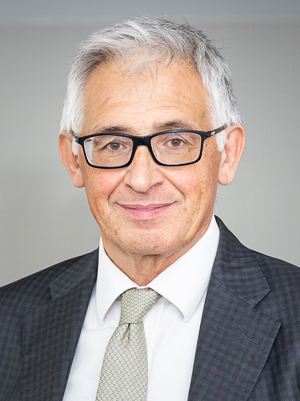
Speech by Piero Cipollone, Member of the Executive Board of the ECB, at the Accademia Nazionale dei Lincei
Rome, 12 February 2026
Preserving monetary sovereignty has been a key objective of our single currency.[1] And as guardian of the euro, the European Central Bank (ECB) makes a key contribution to Europe’s independence. But while money is one of the most advanced aspects of European integration, we cannot take our monetary sovereignty for granted in the face of today’s geopolitical and technological developments.
In a world where external threats are growing and dependencies are used as leverage, it is becoming increasingly obvious that Europeans can no longer outsource core functions that are critical to their security and prosperity. This is specifically true for payments and finance, where I will argue that our dependencies have become excessive.
To put it simply: if we lose control of our money, we lose control of our economic destiny. And we surrender a key attribute of sovereignty.[2]
Central banks are entrusted with issuing, on behalf of the sovereign, the only money that is legal tender. In the words of Jean Bodin, “only he who has the power to make law can regulate the coinage”.[3]
Because it is backed by the sovereign, central bank money offers a monetary anchor to the financial system – for other forms of money to be trusted, they must be convertible into central bank money at par at all times.
So a key part of our mandate is to ensure that central bank money remains fit for purpose, supporting the smooth functioning of payment systems. At the same time, we are tasked with preserving the value of money by maintaining price stability. To fulfil this objective, we need to retain control of financing conditions in the economy. This also requires central bank money to continue to play a key role.[4]
Ultimately, monetary sovereignty requires ensuring that our currency remains relevant, so that European consumers and businesses can rely on it for both retail transactions – the purchase of goods and services – and wholesale transactions – the settlement of claims between banks.
The euro’s relevance depends not only on sound macroeconomic policies – most notably an independent monetary policy aimed at preserving price stability – but also on the credibility, resilience and efficiency of the material and immaterial foundations of money. Payments and finance are the material part. Trust is the immaterial part.[5]
But these foundations are going through a profound transformation as a result of digitalisation and the emergence of new technologies. If we do not take a leading role in this transformation, we could end up at the whim of decisions made elsewhere. So, central bank money must evolve to retain its key role in payments and finance, and we need to act now to avoid excessive dependencies in these areas.
Today, I will recall how our monetary union strengthens Europe’s sovereignty. I will then argue that if we are to bolster our monetary sovereignty, we need to reduce existing dependencies in payments and finance, and avoid developing new ones. Finally, I will contend that this would contribute to economic efficiency and support Europe’s competitiveness.
How the euro strengthens Europe’s sovereignty
Let me start by explaining how the euro underpins Europe’s sovereignty.
Sovereignty has been a thorny subject in the European debate because of the apparent trade-off between national sovereignty and European integration. But this reflects a fundamental misunderstanding. Centuries of wars between European powers have shown that if it comes constantly under threat from its neighbours, a European state’s sovereignty is purely nominal. How sovereign could such a state be if it could not protect the peace and security of its citizens? It was therefore clear to Europe’s founding fathers that for national sovereignty to be real and not just nominal, some of it had to be pooled.
Sharing sovereignty on policies of common strategic interest was therefore the pre-condition – not the negation – of national sovereignty.
But pooling key sovereignty attributes, such as establishing a European Defence Community, proved too sensitive after the Second World War.[6] Another approach was therefore taken: Europe’s sovereignty was built in the economic realm. Europeans pursued Robert Schuman’s idea of merging economic interests so that war would be “not merely unthinkable, but materially impossible”.[7]
As a result, Europe was gradually given key attributes of sovereignty in the economic sphere: first, the power to make laws to establish and regulate a Single Market, then the power to issue a single currency. This has been more successful than is often acknowledged. Not only have we had peace in Europe, but by avoiding destructive wars, Europe’s economic wealth expanded at an unprecedented pace. Aggregate per capita national wealth for France, Germany, Italy and Spain was essentially the same in 1950 as a century earlier. Since 1950, it has multiplied by 18. And in this same period, it increased from 37% to 83% of US per capita national wealth at purchasing power parity.[8]
Our single currency, the euro, has also strengthened the monetary sovereignty of euro area countries.
In the years that preceded the establishment of the Economic and Monetary Union, the European economy was marred by exchange rate volatility. This undermined price stability and heightened uncertainty, dampening trade and investment in Europe. European countries therefore attempted to keep exchange rates within narrow bands, which required them to replicate the monetary policy of the Bundesbank, which had the strongest track record in the pursuit of price stability. As a result, other national central banks were de facto monetary policy takers, with little freedom on monetary policy decisions.[9] Even so, they repeatedly had to devalue their currencies, losing both the benefits of exchange rate stability and their sovereignty over monetary policy.[10]
Compared with these unstable fixed exchange rate regimes, the adoption of the euro made it possible to restore monetary sovereignty by sharing it at European level. All euro area national central banks now participate in monetary policy decision-making within the ECB’s Governing Council. Decisions are taken in the interests of the euro area as a whole.[11]
Moreover, sharing a single currency means benefitting from a currency with a potentially stronger international role and larger financial markets. The euro is the second most important currency in the international monetary system. Its share across a broad range of indicators stands at close to 20%, which is higher than the euro area’s weight in global GDP.[12] And in the current economic context, there is an opportunity for the euro to assume a global stabilising role.[13] When trade and geopolitical tensions rocked financial markets in recent months, the euro acted as a safe haven.
Greater use of the euro helps make the euro area less vulnerable to spillovers from foreign shocks. The use of the euro in trade invoicing, for example, reduces the pass-through of exchange rate shocks to domestic inflation. The international role of the euro also supports the transmission of our monetary policy. In particular, the use of the euro in global finance increases the spillovers and spillbacks of domestic monetary policy impulses.[14] Our facilities to provide euro liquidity to non-euro area central banks support this role by addressing the risk of disruptions in euro-denominated funding markets outside the euro area. This prevents disruptions in global funding markets from resulting in strong adverse effects on euro area financing conditions and thus impairing monetary policy transmission. As recently announced by President Lagarde, we have been preparing to broaden and facilitate access to our repo lines in response to greater global fragmentation and uncertainty.[15]
The euro has therefore strengthened our monetary sovereignty from both a domestic and international perspective.
Addressing excessive dependencies in payments and finance
We nevertheless face new challenges as a result of geopolitical and technological developments. In a less stable world, external dependencies for critical economic functions can quickly turn into major fragilities.[16]
So we need to adapt to this new reality. As the central bank, we must ensure that external dependencies in payments and finance do not cancel out Europe’s hard-earned monetary sovereignty. And we need to ensure that our currency, the euro, remains fit for purpose in the digital era, ensuring it retains its role internally[17] and internationally.[18]
Digital retail payments
Currently, we face a major dependency in digital retail payments, where we rely to a large extent on a few non-European solutions and payment rails. Given our mandate to ensure the smooth functioning of payment systems, we cannot satisfy ourselves with a situation that puts their resilience at risk.
Card payments are a prominent example. International card schemes account for two-thirds of card transactions in the euro area. 13 out of 20 euro area countries do not even have a domestic card scheme. Even where such schemes exist, they need to co-badge with international card schemes or be added to international digital wallets to enable payments for the use cases they do not cover[19] and for cross-border transactions within the euro area. At this point, we do not have a European solution that works throughout the euro area for all digital payments.
While worrying from a resilience point of view, this dependency might have been less of an issue in a less fragmented world. But that is not the world we live in. We can no longer afford to rely mainly on foreign solutions for a matter as critical as daily payments.
If Europeans can no longer pay, they are no longer in control of their money. And the economy is exposed to grinding to a halt suddenly. Even without reaching this point, such a dependency could be used as leverage against Europe’s interests.
And this dependency comes with a price tag. European banks are already losing fees to international card schemes, and fees and data to big tech mobile payment solutions. This has the potential to generate a vicious circle whereby dominant foreign players increasingly control European transaction data, giving them a competitive advantage to offer payment and financial services, further deepening our dependencies. In parallel, the loss of fees makes European payment service providers financially weaker, reducing their ability to compete effectively.
Tomorrow, European banks could lose fees, data and deposits to stablecoins, which are already partnering with international card schemes to provide an alternative means of settlement to bank deposits. US dollar-denominated stablecoins could also start to gain a foothold in Europe, starting with retail cross-border payments – in e-commerce and tourist locations, for instance – or fringe use cases such as gaming, micro-payments and machine-to-machine payments. The risk could become even more serious if the issuers of these stablecoins were allowed to remunerate their token holders.
So we need to address our current dependencies in retail payments and reverse the tide. We have the capacity to do so. The central bank has the mandate to provide means of payment. This is what we do when we issue banknotes. And for many years, cash has not only helped unite Europe, it has also kept us in control of how we pay. But Europeans are increasingly turning to digital payments. People continue to value and use cash, and we are fully committed to ensuring it remains widely available and accepted[20] – we are in fact preparing to produce and issue a third series of banknotes, featuring new designs. But physical cash no longer covers all Europeans’ needs. For instance, more than one-third of day-to-day payments in the euro area are for online transactions, where cash cannot be used. We thus need to complement physical cash with its digital equivalent, a digital euro. Although we are making technical preparations to issue the digital euro, we will only do so once the digital euro Regulation has been adopted. The EU co-legislators are playing a key role in establishing and regulating the use of the digital euro.[21]
A digital euro will ensure that Europeans have a European public option, based on European technology and European infrastructure, which makes it possible to pay digitally in all situations throughout the euro area. Moreover, the digital euro will allow banks to offer their clients payment solutions that fulfil all their needs, avoiding the need for them to look elsewhere. It will do so in two ways: first, by enabling European private payment solutions to co-badge with digital euro[22], ensuring that their customers can even pay at merchants and for use cases they do not currently cover. Second, it will make it easier for these solutions to expand their coverage by using the digital euro open standards and acceptance network.
The digital euro will therefore make it much easier and cheaper for private initiatives to achieve pan-European reach and expand to e-commerce and in-shop payments. Since the digital euro will be legal tender, it will be accepted by all merchants that accept digital payments, thus creating an unparalleled acceptance network that interoperability alone cannot create and that European private initiatives will be able to leverage. This will enable them to roll out their solutions more easily without needing to make large investments to convince merchants to adopt their own standards in stores and online, or being left to rely on proprietary standards owned by international card schemes.[23]
Let me emphasise here that this has nothing to do with protectionism. We remain open to foreign solutions. The digital euro will support a vibrant European market for digital retail payments, with more competitive players able to offer better services to consumers, but without the dependencies that put the euro area’s economic security and monetary sovereignty at risk.
Digital finance
Let me now turn to a dependency that could emerge if we do not take timely action, which is in the realm of digital finance. Currently, wholesale transactions – high-value transactions and payments for securities between banks – are largely settled in central bank money.[24]
But financial market participants are exploring the potential of new technologies, such as tokenisation and distributed ledger technology (DLT), to enhance efficiency. These technologies allow assets to be issued or represented digitally, making it possible to trade, settle and manage custody of these assets on a single platform, available 24/7, 365 days a year. And they enable the use of smart contracts to automate corporate actions and cash flows that today require multiple intermediaries and manual operations.
This paves the way for a new digital finance ecosystem that has the potential to transform finance as we know it. But if we are not quick to offer tokenised central bank money settlement, the risk is that this ecosystem will be built elsewhere or rely on settlement assets that are issued outside Europe and not denominated in euro. This would undermine our monetary sovereignty.
Take US dollar-denominated stablecoins, which currently account for 99% of the global stablecoin market and are dominated by two non-European issuers. If European tokenised finance and cross-border payments came to depend on such stablecoins, the role of the euro would be diminished. We would, moreover, be relying on assets that entail liquidity, concentration, operational and fragmentation[25] risks, are mostly issued by non-banks, and are exposed to runs. Our payment infrastructure for wholesale transactions would be anchored outside Europe and shaped elsewhere. In a world where payment networks can be weaponised, this would be a risk to our economic security.
We are therefore preparing to issue tokenised central bank money for the settlement of digital asset transactions on DLT. This will ensure that participants in the digital finance ecosystem can natively settle their transactions using a risk-free, euro-denominated asset. In turn, it will protect Europe’s monetary sovereignty and avoid fragmentation by offering a common anchor into which all private tokenised assets can be converted.
We are planning to offer a solution for settlement of DLT-based transactions in central bank money as early as the third quarter of this year. We have called this project “Pontes” – Latin for “bridge” – as it will act as a bridge between our traditional settlement infrastructure (T2) and DLT. At the same time, we are working with market participants to develop an integrated digital finance ecosystem in Europe. This is our “Appia” project.[26] With this name, we wanted to evoke the idea of a journey by referencing one of the symbols of the road network that Romans built throughout Europe. Appia will be a learning journey that paves the way for the Eurosystem to design, together with market participants, a pan-European ecosystem based on DLT. It will ensure we can rely on a shared European ledger or a European network of interoperable platforms, where all roads lead to the euro.
As in the current system, central bank money will not crowd out private settlement assets such as stablecoins or tokenised deposits. Instead, it will exist alongside them, ensuring that they are interoperable and can be converted into central bank money, thereby supporting trust. This will underpin the integration and stability of Europe’s digital finance ecosystem and ensure it has a euro-denominated settlement asset at its core.
In the coming weeks, we will publish a paper that will explain in greater detail how we will go about the Appia journey. And legislators could consider supporting this effort by exploring the possibility to establish a 28th legal regime for digital assets.
Global payments
The international role of the euro has taken centre stage in the economic policy debate of late. I have already alluded to the fact that our monetary sovereignty would benefit from a stronger role of the euro globally. However, the emergence of US dollar-denominated stablecoins has given rise to new concerns about the euro’s role in cross-border transactions. US dollar stablecoins aim to provide a digital dollar for global transactions, in addition to their current use as settlement assets in decentralised finance.
Stablecoins seem to be filling the gaps left by the retrenching of the “correspondent banking” model in recent years. According to Swift data, active correspondent banking relationships declined by 29% between January 2011 and December 2022.[27] Should US dollar-denominated stablecoins fill this gap, the euro’s share of global export invoicing – which, at over 40%, is currently on a par with that of the US dollar[28] – could be put under pressure.
The Eurosystem has thus also taken action in this space. We are further expanding links between TARGET Instant Payment Settlement (TIPS) and other fast payment systems, taking advantage of the fact that there are about 100 such systems around the world. This will make it possible for ordinary people and businesses to make fast transfers from their bank account to any other account holder in a connected jurisdiction in a transparent and cost-efficient way.
Euro area countries are already connected with Denmark and Sweden in TIPS. Norway will follow in 2028 and Iceland has also expressed an interest.[29] In addition, a bilateral link between TIPS and India’s Unified Payments Interface will go live in 2027, and we are actively exploring similar opportunities with Switzerland, Brazil and Nexus Global Payments, a network which will connect fast payment systems from Malaysia, the Philippines, Singapore, Thailand, India and Indonesia. Moreover, the Eurosystem, through Banca d’Italia, is supporting the central banks of several Western Balkan countries[30] in their efforts to develop a fast payment system modelled on TIPS. Once this “TIPS clone” is operational later this year, it will be technically possible to link it with TIPS.
These links will increase the efficiency of correspondent banking by shortening settlement chains. And they will use the euro and currencies of linked jurisdictions as settlement assets, thereby reducing the role of third currencies. We are exploring how tokenised settlement assets could be used in this context to further enhance efficiency and monetary sovereignty.[31]
The digital euro could also act as a connector. It is first and foremost intended for domestic use. But it is also being designed with international use in mind, based on an approach that respects the sovereignty of other countries.[32]
Financing innovation
But we should not forget traditional finance, where we face a problematic dependency when it comes to the financing of innovative companies.
Europe fails to provide innovative European firms with sufficient access to domestic funding sources. At present, the European venture capital market is still valued below €200 billion, compared with around €1 trillion for the United States. And European scale-ups raise 50% less capital on average than their Silicon Valley peers after ten years of operations, according to research by the European Investment Bank.[33]
European innovative firms are thus left looking elsewhere for funding, and often end up relying on US venture capital, which has been found to increase their probability of relocating to the United States.[34] Barriers to expansion – in other words, the lack of a single market for innovative businesses in Europe – further increase the attractiveness of relocating to the United States, where they can more easily scale up.[35] In his report on European competitiveness, Mario Draghi noted that “Between 2008 and 2021, close to 30% of the ‘unicorns’ founded in Europe – startups that went on to be valued over USD 1 billion – relocated their headquarters abroad, with the vast majority moving to the US”.[36]
This issue has attracted significant attention. Last year the European Commission announced its intention to develop a “28th regime” for innovative companies as part of its Startup and Scaleup Strategy. This would introduce a harmonised, EU-wide corporate legal framework, making it easier for such companies to scale up and operate across the Single Market.[37] Further recommendations have been made in two recent reports by European experts.[38]
Fixing the issue would help Europe retain talent and technology, thereby boosting growth. It would also reduce the need for innovative firms to use non-euro-denominated funding sources or intermediaries whose lending rates are less sensitive to our policy rates. This would, in turn, support the effectiveness of our monetary policy transmission by giving us more control over financing conditions.
At present, ECB staff analysis points instead to a more muted channelling of monetary policy easing impulses to innovative firms, partly reflecting the limited depth of the euro area equity market. This is despite the fact that euro area households hold substantial savings, a significant share of which is invested abroad, as reflected in the euro area’s significant current account surplus. This points to an opportunity: deeper and more integrated capital markets could better support both bank and non-bank intermediation and help channel these funds into investment by euro area firms.
Recent evidence points to a disproportionate increase in lending from banks to safer borrowers since the start of our easing cycle in June 2024. This suggests that part of the easing is not reaching innovative sectors. At the same time, euro area non-bank financial institutions are financing activities outside the euro area, including the direct financing of non-euro-area corporates, particularly in innovative sectors. Strengthening domestic sources of funding for innovative euro area firms would therefore help ensure a more complete and direct transmission of our monetary policy.
Monetary sovereignty and economic efficiency
Let me now turn to the possible trade-off between monetary sovereignty and economic efficiency.
Addressing excessive dependencies to bolster sovereignty has sometimes been presented as a risk management measure that comes at a price.[39] I would instead argue that, in today’s world, such an approach has the potential to increase economic efficiency.
Indeed, recent developments call for a reassessment of our concept of economic efficiency. We need to move beyond a static definition of efficiency as the cost per unit of output at a given time, and instead consider the dynamic effects of economic decisions, including on resilience, innovation and competition. Lower costs in the short run might not be economically efficient if they expose Europe to major costs later.
As an example, deviations from the GDP growth trend in the euro area since 2019 can mainly be attributed to two shocks: the pandemic and the energy crisis linked to Russia’s invasion of Ukraine. While the gap caused by the pandemic had almost fully closed by 2022, we still faced a 2% gap in 2025. Had we not been as dependent on Russia for energy, we would not have faced such a large and protracted cost. Conversely, euro area GDP growth is now being bolstered by higher business investment, driven notably by investment in new digital technologies. This is expected to be further supported by government spending on defence and infrastructure, which could generate a “sovereignty dividend”. By increasing growth potential, higher investment could raise the euro area economy’s speed limits: higher growth could be achieved without endangering price stability. So economic resilience matters, and it pays off over time.
The same applies to addressing dependencies in payments and finance, which undermine our monetary sovereignty. Addressing the dependencies I have outlined would strengthen the euro area’s position in finance and technology markets. Incidentally, finance and technology explain most of the EU’s productivity gap vis-à-vis the United States. When abstracting for the information and communications technology (ICT) and financial sectors, the gap disappears. Strengthening Europe’s ability to finance and retain its innovative companies, so that they scale up in Europe, would support our ICT sector. And ensuring that Europe can leverage the full extent of its market in digital payments and finance would strengthen Europe’s financial sector.
When we instead allow our market to remain fragmented and dominated by a handful of foreign firms, competition suffers.
Take the ICT sector. Market power dynamics and high fixed costs imply that companies that have invested heavily in intangible assets can deter entry more easily. This concentrates gains among dominant firms and eventually weighs on aggregate productivity.[40] Facilitating the financing of early intangible investments by European innovative firms is therefore critical.
When it comes to digital payments, the dominance of international card schemes has resulted in increasingly high fees for European merchants. And the strong dependency on these schemes for payments within the euro area means that non-European providers enjoy a significant share of the benefits of reducing internal trade frictions. To ensure that Europe reaps the benefits of its Single Market, we need to overcome the fragmentation of European payment solutions. The digital euro will make this ambition a reality. It will reduce merchant fees, particularly for smaller merchants, by offering an alternative to dominant international payment solutions. And it will save European banks money whenever a digital euro transaction replaces an international card scheme transaction, because they will no longer need to pay scheme and processing fees.[41]
Similarly, as I mentioned earlier, our plan to interlink TIPS with other fast payment systems around the world will support faster and cheaper cross-border payments. By shortening correspondent banking chains, it will remove the current multiple layers of intermediaries that duplicate compliance checks, add costs and cause delays in cross-border transactions.
Conclusion
Let me conclude.
In establishing the euro, European countries regained their monetary sovereignty. And in an unstable world, this benefit offered by our single currency has only increased in importance.
With the euro, we share a key attribute of sovereignty. In the words of Robert Schuman, we have “merged economic interests” when it comes to money. This underpins our unity, because what affects the euro affects all euro area countries, and vice versa.[42]
But we cannot be complacent. In a world where excessive dependencies can be used as leverage, preserving our monetary sovereignty requires bold steps to address the dependencies we had tacitly accepted in payments and finance until now. This is a fundamental aspect of what President Lagarde has called Europe’s “march to independence”.[43]
When it comes to digital retail payments, digital finance, cross-border payments and the financing of innovative companies, we must ensure that we no longer depend excessively on the kindness of strangers.[44] This does not mean closing our market. Rather, it means taking decisive action to integrate our European market and make it easier for European players to expand and compete across national borders.[45]
In doing so, we will consolidate economic resilience, efficiency and security, while reinforcing our monetary sovereignty.
Thank you for your attention.
I would like to thank Jean-Francois Jamet for his help in preparing this speech, as well as Carlo Altavilla, Alessandro Giovannini, Daniel Kapp, Johannes Lindner, Arnaud Mehl and Thomas Vlassopoulos for their comments.
For a detailed discussion of the interrelation between sovereignty and monetary sovereignty, see Bindseil, U. and Senner, R. (2025), “Revisiting national, economic and monetary sovereignty”, September; and Villeroy de Galhau, F. (2023), “Monetary sovereignty in the 21st century”, speech at the Council of State Conference “Monetary sovereignty in the 21st century”, Paris, 14 November.
Bodin, J. (1576), Six Books of the Commonwealth.
Central bank money is a liability of the central bank and is currently issued in two forms: cash, which is widely accessible to the public, but not remunerated; and funds held by commercial banks on accounts at the central bank, which are remunerated. By setting interest on the money held on these accounts, the central bank steers other interest rates in the economy, thereby implementing its monetary policy.
See Visco, I. (2021), “Back to the future of money”, remarks at a panel discussion of the Andrew Crockett Memorial Lecture by Mark Carney, Bank for International Settlements, 28 June: “After all, physical, electronic or virtual, the efficiency and stability of what we call "fiduciary money" is ultimately dependent on trust, on confidence – which indeed shares the same etymological root with "fiduciary". And this is ultimately what we have to preserve.”; and Panetta, F. (2025), “Money and Trust: From the Renaissance to the Digital Age”, speech on the occasion of the external Governing Council monetary policy meeting, official dinner given by the Bank of Italy, Florence, 29 October.
The European Defence Community was not ratified in 1954. The need for European countries to strengthen their defence capacity to protect their collective security has recently led to a renewal of the debate on pooling sovereignty in this area. This could also strengthen the euro internationally. As President Lagarde has emphasised, “Trade and military power are important for establishing demand for an international currency.” See Lagarde, C. (2025), “Earning influence: lessons from the history of international currencies”, speech at an event on Europe’s role in a fragmented world organised by Jacques Delors Centre at Hertie School in Berlin, Germany, 26 May.
Schuman Declaration, 9 May 1950. See also Visco, I. (2023), “Europe and Italy: prosperity in union and peace”, speech at the forum on “Europe: Peace, Protection, Prosperity”, organised at the French Embassy in Italy.
World Inequality Database and ECB staff calculation.
As famously theorised by Mundell and Fleming in their “impossible trinity” (or monetary trilemma), it is not possible to simultaneously have a fixed foreign exchange rate, free capital movement and an independent monetary policy. See Mundell, R. A. (1963), "Capital mobility and stabilization policy under fixed and flexible exchange rates", Canadian Journal of Economic and Political Science, Vol. 29, No 4, pp. 475-485; and Fleming, J. M. (1978), Essays on Economic Policy, Columbia University Press, New York.
Draghi, M. (2018), “Europe and the euro 20 years on”, speech at Laurea Honoris Causa in Economics by University Sant’Anna, Pisa, 15 December.
Our comprehensive toolkit ensures the smooth transmission of monetary policy across the euro area. See ECB (2025), An overview of the ECB’s monetary policy strategy, section 3.3.; and ECB (2025), “ECB Monetary Policy Strategy Assessment 2025 – Workstream 2: Monetary policy tools, strategy and communication”, Occasional paper series, No 372.
ECB (2025), The International Role of the Euro.
See Lagarde, C. (2025), “Turning openness into strength: the moment of the euro”, speech at Business France event “Business en Européens” in Paris, France, 7 October, and Lagarde, C. (2025), “Earning influence: lessons from the history of international currencies”, speech at an event on Europe’s role in a fragmented world organised by Jacques Delors Centre at Hertie School in Berlin, Germany, 26 May.
See Panetta, F. (2020), “Unleashing the euro’s untapped potential at global level”, introductory remarks at a meeting with Members of the European Parliament; and Coeuré, B. (2019), “Should the ECB care about the euro’s global role?”, VoxEU Column, 25 February.
At the Q&A session during the press conference on 5 February 2026, President Lagarde said: “while we are tied to the monetary purpose of what we do in terms of liquidity and we have to constantly assess the proportionality of what we do, it is a fact that we are looking at our liquidity framework and that the repo lines – to be distinguished from the swap lines – are in progress in terms of reframing them, opening up the access and making them more attractive to other national central banks outside the euro area and outside Europe. So this is in the works, and I hope to be able to announce a bit more in a few days.”
See Attinasi, M.-G., Boeckelmann, L., Gerinovics, R. and Meunier, B. (2025), “Unveiling the hidden costs of critical dependencies”, Economic Bulletin, Issue 5, ECB.
See Cipollone, P. (2025), “The transformation of money: technological disruption and the future of financial services”, guest lecture at the Frankfurt School of Finance & Management, Frankfurt am Main, 8 December.
See Panetta, F. (2025), “The struggle to reshape the international monetary system: slow- and fast-moving processes”, 2025 Whitaker Lecture at the Central Bank of Ireland, Dublin, 9 December.
For instance, domestic card schemes in Germany and Italy cannot be used to pay in ecommerce without co-badging with an international card scheme or adding the card to an international digital wallet.
For instance, in our opinion on the Legal Tender of Cash Regulation, we advocated for a clear prohibition of “no cash” practices. See Opinion of the European Central Bank of 13 October 2023 on a proposal for a regulation on the legal tender of euro banknotes and coins (CON/2023/31) and Cipollone, P. (2025), “Making euro cash fit for the future”, The ECB Blog, ECB, 4 August. We have also invited national legislators to protect the mandatory acceptance of euro cash. See, for instance, Opinion of the European Central Bank of 22 January 2026 on limitations to cash payments (CON/2026/3).
Pursuant to Article 133 of the Treaty on the Functioning of the European Union, “Without prejudice to the powers of the European Central Bank, the European Parliament and the Council, acting in accordance with the ordinary legislative procedure, shall lay down the measures necessary for the use of the euro as a single currency. Such measures shall be adopted after consultation of the European Central Bank”.
When European physical cards or digital wallets co-badge with digital euro, the corresponding schemes would be used wherever they are accepted, and the digital euro would be the fall-back solution wherever the private sector scheme is not accepted. See ECB (2025), Fit of the digital euro in the payment ecosystem – Report on the dedicated Euro Retail Payments Board (ERPB) technical workstream, October.
ECB (2025), Fit of the digital euro in the payment ecosystem – Report on the dedicated Euro Retail Payments Board (ERPB) technical workstream, October.
This is in keeping with the principles for financial market infrastructures. See Bank for International Settlements (2012), Principles for financial market infrastructures, April: “Principle 9: Money settlements. An financial market infrastructure should conduct its money settlements in central bank money where practical and available”.
If tokenised payments and finance rest on fragmented pools of private settlement assets, liquidity can splinter and assets cannot be traded across platforms. Market participants may need to hold multiple stablecoins just to pay different counterparties.
Cipollone, P. (2025), “The transformation of money: technological disruption and the future of financial services”, guest lecture at the Frankfurt School of Finance & Management, Frankfurt am Main, 8 December.
Committee on Payments and Market Infrastructures (2023), “CPMI quantitative review of correspondent banking data”, Bank for International Settlements.
See Brüggen, A., Georgiadis, G. and Mehl, A. (2025), “Global trade invoicing patterns: new insights and the influence of geopolitics”, The international role of the euro, ECB, June. When euro area countries are excluded, the share of the US dollar and the euro was about 60% and 25% respectively in 2023.
See ECB (2024), “Norway joins TIPS, adding Norwegian krone to Eurosystem’s instant payment service”, press release, 29 November; and ECB (2024), “Seðlabanki Íslands expresses an interest in joining T2 and TIPS”, press release, 9 September.
Albania, Bosnia and Herzegovina, Kosovo, Montenegro and North Macedonia.
Cipollone, P. (2025), “The transformation of money: technological disruption and the future of financial services”, guest lecture at the Frankfurt School of Finance & Management, Frankfurt am Main, 8 December..
When visiting the euro area temporarily, non-euro area residents would have access to the digital euro through a European payment service provider. Merchants outside the euro area may also be allowed to accept digital euro payments from euro area residents. Moreover, users outside the euro area could be granted permanent access to the digital euro, subject to an agreement between the EU and non-EU countries and a complementary arrangement between the ECB and the respective central banks. Appropriate safeguards would be put in place to avoid stoking currency substitution in those countries. Moreover, like TIPS, the digital euro’s design includes multi-currency enabling features that would allow non-euro area countries to use the digital euro infrastructure to offer their own digital currencies and facilitate transactions across these currencies. See Cipollone, P. (2025), “Enhancing cross-border payments in Europe and beyond”, speech at the Regional Governors’ Meeting, Osijek, Croatia, 1 April.
European Investment Bank (2024), The scale-up gap: Financial market constraints holding back innovative firms in the European Union, 24 July.
Weik, S., Achleitner, A.-K. and Braun, R. (2024), “Venture capital and the international relocation of startups”, Research Policy, Vol 53, Issue 7, September.
See European Investment Bank (2026), Drivers of relocation by innovative EU startups and scaleups. The founders and chief executives of 440 firms that were founded in the EU and relocated abroad, mainly to the United States, cited access to capital, proximity to large and unified markets and regulatory simplicity as key reasons for moving. The United States is widely perceived as offering a more attractive environment in these respects, particularly when it comes to supporting companies beyond the early stages of growth.
Draghi, M. (2024), The future of European competitiveness – A competitiveness strategy for Europe, September.
European Commission (2025), The EU Startup and Scaleup Strategy – Choose Europe to start and scale, 28 May. The intention of the 28th regime is to “provide a single set of rules for companies. It would include an EU corporate legal framework, based on digital-by-default solutions, and will help companies overcome barriers in setting up, scaling up and operating companies across the Single Market. To do so, it will simplify applicable rules and reduce the cost of failure, by addressing specific aspects within relevant areas of law, including insolvency, labour and tax law. It will explore the possibility of enabling companies to establish in Europe more rapidly, ideally within 48 hours”.
See Kukies, J. and Noyer, C. (2026), Financing innovative ventures in Europe – Recommendations to close the scaleup financing gap, deepen the Savings and Investments Union and strengthen Europe’s competitiveness, January; and Angeloni, I. and Cavallini, A. (2026), Feasible Steps to Finance Innovation in Europe: Six Proposals to Strengthen EU Capital Markets, Institute for European Policymaking, Bocconi University, 9 January.
Carney, M. (2026), Special address at the World Economic Forum, Davos, 20 January.
De Ridder, M. (2024), “Market Power and Innovation in the Intangible Economy”, American Economic Review, Vol. 114, No 1, pp. 199-251.
Cipollone, P. (2026), “The digital euro: strengthening Europe’s payments ecosystem”, speech at the event “The digital euro in Cyprus”, Nicosia, 6 February.
See also Panetta, F. (2022), “Europe’s shared destiny, economics and the law”, Lectio Magistralis on the occasion of the conferral of an honorary degree in Law by the University of Cassino and Southern Lazio, Cassino, 6 April.
Lagarde, C. (2025), “‘C’est le début d’une marche vers l’indépendance’ de l’Europe”, podcast interview on L’invité de 8h20, France Inter, Radio France, 31 March.
Cipollone, P. (2025), “Harnessing the digital future of payments: Europe's path to sovereignty and innovation”, speech at the France Payments Forum event “Digital euro and the future of payments in Europe”, Paris, 15 May.
See also Letta, E. (2024), Much more than a market – speed, security, solidarity; Lagarde, C. (2025), “From resilience to strength: unleashing Europe’s domestic market”, speech at the 35th Frankfurt European Banking Congress, Frankfurt am Main, 21 November; and Georgieva, K. (2026), “Re-energizing Europe”, remarks at the College of Commissioners Seminar on Competitiveness, Leuven, Belgium, 4 February.
Europejski Bank Centralny
Dyrekcja Generalna ds. Komunikacji
- Sonnemannstrasse 20
- 60314 Frankfurt am Main, Niemcy
- +49 69 1344 7455
- media@ecb.europa.eu
Przedruk dozwolony pod warunkiem podania źródła.
Kontakt z mediami